Yooper Lunch
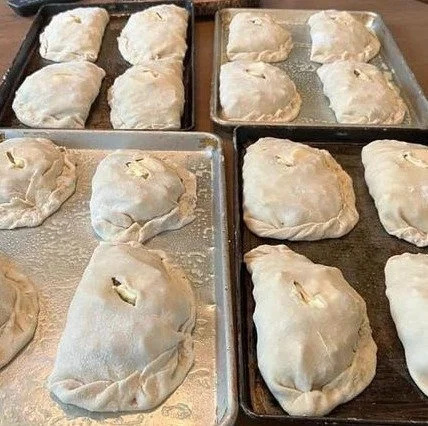
Pasty Fillings Three Ways
Dice all the ingredients small and be sure everything is consistent in size.
Traditional Cornish Pasty Filling
Yields 12 pasties
• 1 lb. ground beef
• 1 lb. ground lamb
• ½ large yellow onion
• 4-5 medium golden potatoes, skin on
• 1 large or 2 small carrots
• ½ large rutabaga, peeled
• Fresh herbs (parsley, sage and thyme), chopped
In a large skillet, brown the meat and onion. Add the potato, rutabaga and carrot partway through. Continue to stir while the meat cooks through. Turn off the heat and leave on the stove to cool. Drain off any extra fat. It is okay if the potato and rutabaga are still firm, as they will finish cooking in the oven later. Stir in the fresh herbs and salt/pepper to taste.
Roasted Root Vegetable Pasty Filling
Yields 12 pasties
• 4-5 Yukon or red potatoes
• 1 large carrot
• 4 small beets, peeled
• ½ large rutabaga, peeled
• 1 sweet potato. peeled
• 3 cloves of garlic, diced
• Fresh herbs (rosemary and thyme)
• Olive oil, to drizzle
• Feta cheese, crumbled
Preheat oven to 375°F. Place all the diced ingredients into a large bowl. Add the drizzle of olive oil and toss until everything is coated. Add the herbs. Spread the root vegetable mixture onto a sheet pan and roast in the oven for approximately 30 minutes. The goal is to par-bake – they will finish cooking in the assembled pasty. Allow the filling to cool before assembly. As you are assembling this variety, add a crumble of feta cheese to each pasty before you crimp the crust.
Potato Curry Pasty Filling
Yields 12 pasties
• 4-5 Yukon or red potatoes
• 1 large yam
• 1 medium red onion
• 1 large carrot
• 4 garlic cloves
• Small bunch of kale
• ½ cup of raisins or dried cherries
• Fresh herbs (Thai basil and mint)
• Curry powder. You can use a store-bought blend or make your own using a combination of:
- 2 Tbsp turmeric
- 1 Tbsp coriander powder
- 1 tsp cayenne pepper
Place all the diced ingredients into a large bowl (minus the raisins). Add the drizzle of olive oil, herbs and curry powder and toss until everything is coated. Spread the root vegetable mixture onto a sheet pan and roast in the oven for approximately 30 minutes. They will be al dente and will finish cooking in the assembled pasties. Add the raisins, and allow the filling to cool before assembly.
Pasty Crust
Yields roughly 6 pasties. Make two batches rather than doubling the recipe, which could make the flour difficult to work with.
• 2 ⅓ cups bread flour
• 1 tsp granulated sugar
• 1 tsp table salt
• 1 tsp apple cider vinegar
• ¼ cup vegetable shortening (cold)
• ¾ cup unsalted butter (cold and diced)
• ¼ cup and 1 Tbsp ice cold water
- Mix flour, sugar and salt in a large bowl.
- Add diced butter and use your hands to “cut” the fat into the dry ingredients. Make a pinching motion to break the butter up into smaller pieces.
- Once butter chunks are about half their size, add spoonfuls of shortening and continue to break up the mixture until the largest clumps of fat are about pea-sized.
- Combine ice water and vinegar and sprinkle over ingredients. Use your hands to mix the dough until it comes together in a ball.
- Wrap dough in plastic and flatten into a disk using a rolling pin. Chill for at least two hours up to a couple days. If you let the dough sit in the fridge for longer than a couple of hours, let it sit at room temperature for about 15-20 minutes before rolling.
Your dough is now ready to use. A few tips:
• Try to work the dough as little as you can. In order to keep the crust light and tender, you want to develop as little gluten as possible. The more you work the dough, the more gluten forms, making it tougher. For this reason, I would also only recommend re-rolling out dough scraps once.
• Keep your fats cold. Another reason this shortcrust is so tender is how the fat is incorporated into the dough. If you look closely at good pie dough uncooked, you can see small chunks of butter marbled throughout. These will melt in the oven to create that iconic flaky texture.
• Help your future self roll out the dough. Chilling dough in a neatly wrapped disk will help you roll it out into a nice, even shape when the time comes. Use your hands to pat the sides of the wrapped dough into shape before setting it in the fridge.
This recipe is a variation on my mom’s savory pie crust recipe with minor alterations to make it more suitable for a hand pie.
Assembling the Pasties
- Preheat the oven to 375°F.
- Roll out the dough following the instructions above to an ⅛-inch thickness.
- Using a small plate (6 to 8 inches in diameter) as your guide, cut out circles.
- Rub water around the edge of the circle. This will help seal the pasty.
- Add approximately 3 Tbsp of filling to one side of the circle, fold the other side of the dough over and crimp together with a fork or your hands.
- Slice vent holes in the top of each pasty.
- Whisk together an egg and a splash of milk until well blended to make egg wash. Brush egg wash on each pasty.
- Bake your pasties on a parchment-lined sheet pan. They will take 30-45 minutes and are done when the crust is golden.
- Eat fresh out of the oven or cool on a baking rack and freeze to be enjoyed later.
Michael Brecke’s Pasty Making Tips
- Make sure the crust is rolled out thin. The big mistake people make is making the crust too thick. It results in a soggy/doughy texture on the inside.
- Use high-end, low-fat ground meat, and make sure to drain the fat.
- The special ingredient is love. Don’t skimp on it.
- If you want to learn from the best of the best, try a pasty from Joe’s Pasty Shop in Ironwood, Michigan.