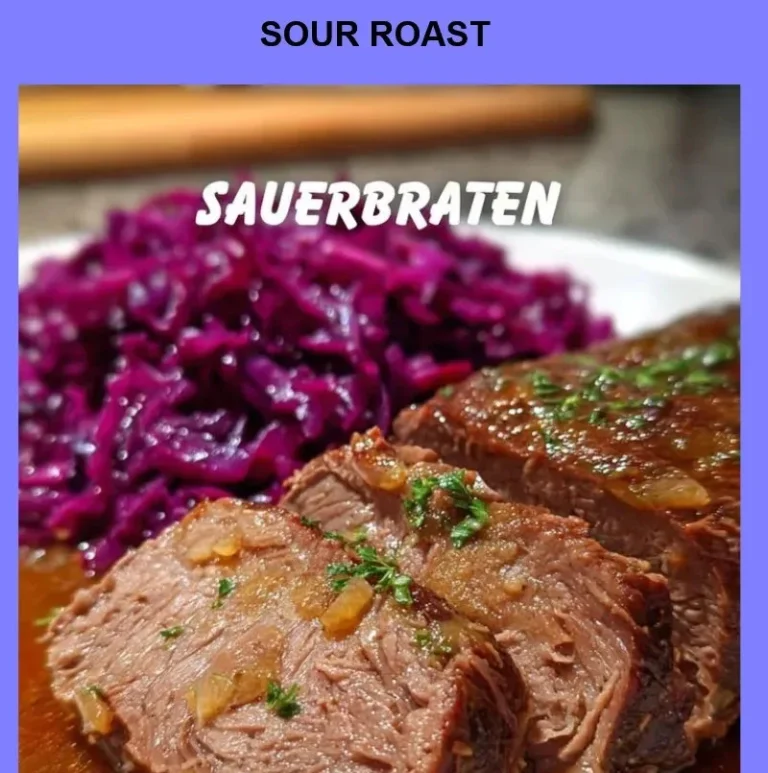
Sour Roast
Sour Roast
There’s something so cozy about a pot of meat braising away in a tangy, slightly sweet sauce — it smells like Sunday dinner even on a rainy Tuesday. This sour roast comes from that same comforting place: long-marinated, slowly cooked beef that melts with a fork and leaves a bright, tangy sauce on your plate.
If you like tangy pot roasts, you might enjoy this as much as a classic sauerbraten recipe, which shares that lovely sweet-and-sour balance.
I first made this on a weeknight when I forgot to defrost dinner; the marinade saved the day because it tenderized the meat nicely while I scrambled to pull sides together. Trust me — a little planning, a lot of patience, and you’ve got dinner that feels special.
Why This sour roast Works
- Marinating for days means the meat soaks up flavor and becomes tender without fuss.
- The balance of red wine or vinegar with brown sugar gives you tang plus a rounded sweetness.
- Browning the roast locks in savory notes before it simmers away into a fork-tender finish.
- It’s forgiving — low-and-slow cooking hides a lot of sins (I once forgot to turn the roast while marinating and it still tasted great).
Bonus tip: that quick sear at the start? It’s not just for color — those browned bits on the bottom add real depth to the sauce.
Ingredients You’ll Need
- 3 to 4 pounds beef roast (chuck or rump work well) — forgiving and flavorful
- 2 cups red wine or vinegar — choose red wine for richness, vinegar for a sharper tang
- 1 cup beef broth — adds savory body to the liquid
- 1 onion, chopped — sweetness and aromatics
- 2 carrots, chopped — subtle sweetness and texture
- 3 cloves garlic, minced — don’t skimp on fresh garlic
- 2 tablespoons brown sugar — balances the acid
- 1 tablespoon mustard — depth and slight bite
- 2 bay leaves — classic braising herb
- 6 whole cloves — a little spice goes a long way
- Salt and pepper to taste — season well before searing
- 2 tablespoons vegetable oil — for browning
- Gingersnap cookies (optional, for thickening) — traditional trick for a slightly spiced, thick gravy
Note: If you opt for vinegar, start with a milder one like apple cider or red wine vinegar. If you like a deeper flavor, use a dry red wine.
Kitchen Tools
- Large mixing bowl or zip-top bag for marinating
- Heavy-bottomed pot or Dutch oven with lid (big enough for a 3–4 lb roast)
- Tongs and a meat thermometer (helpful)
- Wooden spoon or spatula to scrape up browned bits
- Strainer (optional, if you want a clearer sauce)
If you want to compare techniques, some cooks love the traditional approach — I’ve read about it in a detailed traditional sauerbraten write-up that highlights long marinades and their payoff.
Step-by-Step Instructions
In a large bowl, combine 2 cups red wine or vinegar, 1 cup beef broth, 1 chopped onion, 2 chopped carrots, 3 minced garlic cloves, 2 tablespoons brown sugar, 1 tablespoon mustard, 2 bay leaves, 6 whole cloves, salt, and pepper. Mix well and add the beef roast.
- Visual cue: the marinade will look rosy and fragrant. Give it a stir so the sugar starts to dissolve.
- Smell: you should catch a bright tang plus warm clove notes.
Marinate in the refrigerator for at least 3 days, turning occasionally.
- Trust me, the longer it sits (within reason), the more tender and flavorful the roast becomes.
Remove the roast from the marinade and pat dry. Reserve the marinade.
- Patting dry helps the roast brown better.
In a large pot or Dutch oven, heat 2 tablespoons vegetable oil over medium-high heat. Brown the roast on all sides, about 3–4 minutes per side. Don’t rush this step — you want those caramelized bits.
- Visual cue: a deep brown crust forms and the pot starts to smell savory and slightly sweet.
Add the reserved marinade to the pot and bring to a simmer. Cover and cook on low heat for about 2–3 hours, until the meat is tender and pulls apart with a fork.
- Reassurance: low heat and time do the heavy lifting. Keep the simmer gentle so the sauce reduces slowly.
Optional: For a thicker sauce, crush gingersnap cookies into the pot and stir until combined. Taste and adjust salt and pepper.
- The cookies add not just thickness but a warm spice note that’s lovely with this tangy sauce.
Slice the roast and serve with the sauce spooned over. Garnish with fresh herbs if you like.
- Visual cue: glossy, slightly thickened sauce clinging to slices of beef — pure comfort.
Pro Tips for Success
- Let the roast come close to room temperature for 30 minutes before searing; it browns more evenly.
- Use a heavy pot or Dutch oven to maintain steady heat for browning and slow cooking.
- If the sauce is too sharp after cooking, stir in a small pat of butter or a teaspoon of brown sugar to round it out.
- A meat thermometer should read about 190°F if you want pull-apart tenderness for a chuck roast.
Common Mistakes to Avoid
- Overbrowning the garlic early in the process — add garlic in the marinade or later during the browning. If it burns, it turns bitter.
- Skipping the pat-dry step — wet meat won’t brown properly.
- Cooking at too high a simmer — your meat can dry out or the sauce can reduce too fast. Keep it gentle.
Variations and Substitutions
- Spicy: Add a chopped jalapeño to the marinade or a pinch of cayenne for heat.
- Wine-forward: Use a full-bodied red wine instead of vinegar for a richer sauce.
- Lower-sugar: Reduce brown sugar to 1 tablespoon and balance with a splash of orange juice if you want natural sweetness.
- Vegetarian twist: For a plant-based riff, braise thick seitan or a portobello roast in a similar marinade (adjust time). For more reading on marinades that lean on acid and sweet balance, check out this sauerbraten variations guide.
If you love experimenting with marinades, this method pairs really well with different aromatics — cloves can be dialed back or swapped for star anise.
What to Serve With This Recipe
- Creamy mashed potatoes — the classic, soak up that sauce.
- Buttered egg noodles or spaetzle — light and comforting.
- Roasted root vegetables — complement the roast’s sweetness.
- Crusty bread — for sopping up every last drop.
I often serve this with a simple green salad to cut the richness. It’s a nice contrast.
Storage and Leftovers
- Refrigerator: Store in an airtight container for 3–4 days. Reheat gently on low with a splash of broth to loosen the sauce.
- Freezer: Freeze for up to 3 months. Thaw in the refrigerator overnight before reheating.
- Reheating tip: Warm in a pot over low heat rather than the microwave to keep the meat tender.
For tips on reheating braised meats and keeping sauces glossy, I like to refer to a well-used technique discussed in this sauerbraten marinade method article — it’s surprisingly helpful.
FAQ
Q: Can I make this ahead of time?
A: Yes — in fact, it improves if you make it a day in advance. The flavors meld overnight and reheating is easy.
Q: Can I use a slow cooker or Instant Pot?
A: Absolutely. For a slow cooker, brown first then cook on low 6–8 hours. For an Instant Pot, follow the sear, then pressure cook for about 60–75 minutes depending on roast size, then quick-release and thicken the sauce.
Q: What cut of beef is best?
A: Chuck roast or rump are great — they get tender with long cooking. Lean roasts can dry out unless you watch the time and temperature.
Q: Do I have to marinate for 3 days?
A: No — 24 hours will help, but 3 days is ideal for that true tenderizing effect. If you’re pressed for time, even an overnight soak adds good flavor.
Q: Are gingersnaps necessary?
A: Not necessary, but they’re a traditional thickener in some recipes and add a subtle spice. You can also whisk in a cornstarch slurry if you prefer.
Quick Recipe Summary
Prep time: ~20 minutes active + 3 days marinating (min)
Cook time: 2–3 hours braising
Servings: 6–8
Ingredients:
- 3–4 lb beef roast
- 2 cups red wine or vinegar
- 1 cup beef broth, 1 onion chopped, 2 carrots chopped
- 3 cloves garlic minced, 2 tbsp brown sugar, 1 tbsp mustard
- 2 bay leaves, 6 whole cloves, salt & pepper, 2 tbsp vegetable oil
- Gingersnap cookies optional for thickening
Short steps:
- Combine marinade ingredients and marinate roast 3 days.
- Pat dry, reserve marinade.
- Brown roast in oil.
- Add marinade, simmer low 2–3 hours.
- Optional: crush gingersnaps to thicken.
- Slice and serve with sauce.
Final Thoughts
If you try this sour roast, tell me how it goes — did you use wine or vinegar? Did you go the gingersnap route? Don’t worry if it’s not perfect the first time; mine never is either. Cooking is part experiment, part memory, and totally worth the delicious results.
Sour Roast
Ingredients
Method
- In a large bowl, combine the marinade ingredients: 2 cups of red wine or vinegar, 1 cup beef broth, 1 chopped onion, 2 chopped carrots, 3 minced garlic cloves, 2 tablespoons brown sugar, 1 tablespoon mustard, 2 bay leaves, 6 whole cloves, and salt and pepper. Mix well and add the beef roast.
- Marinate in the refrigerator for at least 3 days, turning occasionally to ensure the roast is well coated.
- Remove the roast from the marinade and pat dry. Reserve the marinade.
- In a large pot or Dutch oven, heat 2 tablespoons of vegetable oil over medium-high heat. Brown the roast on all sides, about 3-4 minutes per side.
- Add the reserved marinade to the pot and bring to a simmer. Cover and cook on low heat for about 2-3 hours until the meat is tender and pulls apart with a fork.
- Optional: For a thicker sauce, crush gingersnap cookies into the pot and stir until combined. Taste and adjust salt and pepper.
- Slice the roast and serve with the sauce spooned over. Garnish with fresh herbs if desired.