Greek Boureki
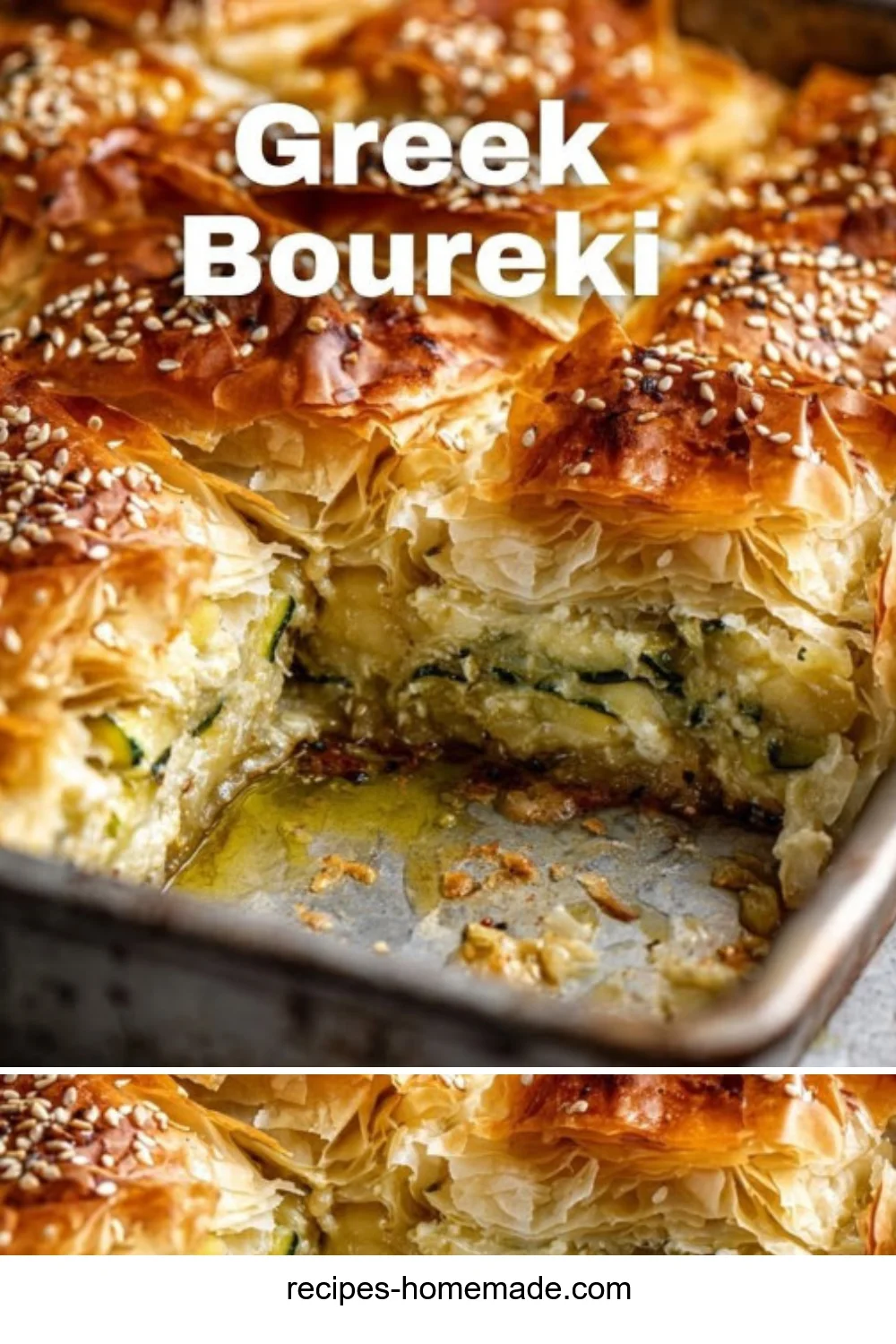
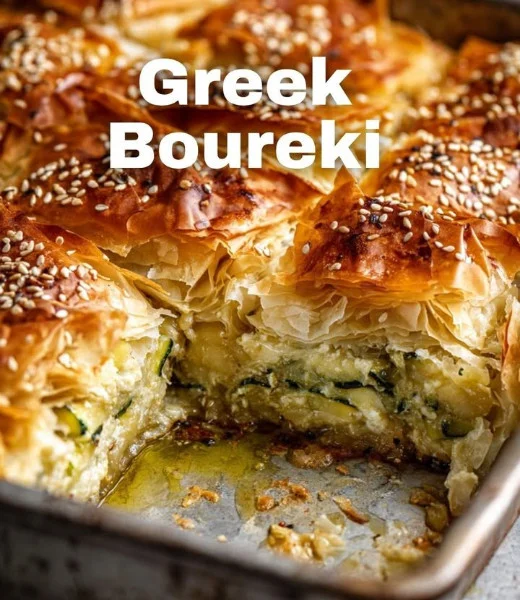
Greek Boureki — I remember standing at my kitchen counter, kids asking for snacks, a pile of bills on the table, and the clock mocking me; that kind of weeknight chaos we all know too well. You’re stretched thin — time, money, patience — and you want dinner that won’t disappoint the pickiest eater or your health goals. This Greek Boureki recipe is the kind of comfort that lights up tired faces and sits easy in your heart and budget. It’s a layered, cheesy, herb-scented oven bake that somehow feels fancy and costs less than takeout. If you love light Mediterranean sides, you’ll also want to try my fresh Mediterranean Greek salad.
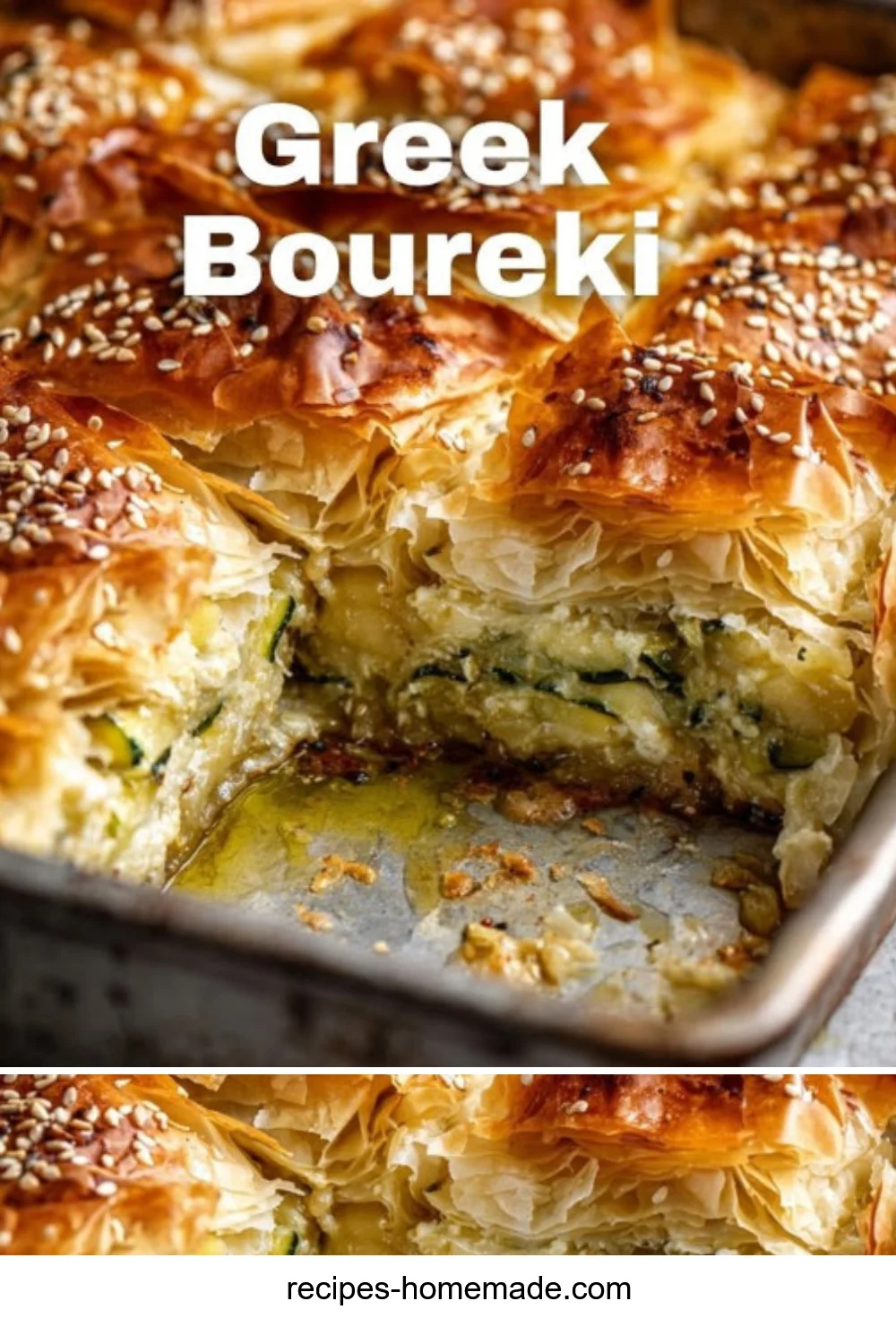
🍽️ Recipe: Greek Boureki
Ingredients:
2 medium zucchinis, thinly sliced, 2 medium potatoes, thinly sliced, 1 cup ricotta cheese, 1 cup feta cheese, crumbled, 1/4 cup fresh mint, chopped, 1/4 cup fresh dill, chopped, 1/2 teaspoon salt, 1/4 teaspoon black pepper, 12 sheets of phyllo pastry, 1/2 cup unsalted butter, melted, 1 cup milk, 1 egg
Instructions:
- Preheat your oven to 375°F (190°C).
- In a bowl, combine ricotta, feta, mint, dill, salt, and pepper.
- Grease a baking dish with some melted butter.
- Layer 4 sheets of phyllo in the dish, brushing each layer with melted butter.
- Spread half of the potatoes and zucchini over the phyllo.
- Spread half of the cheese mixture over the veggies.
- Repeat layering with the remaining vegetables and cheese.
- Top with remaining phyllo, brushing each layer with butter.
- In a bowl, whisk together milk and egg, then pour over the top layer.
- Bake for 45-50 minutes or until golden brown.
- Let it cool for a few minutes before slicing and serving.
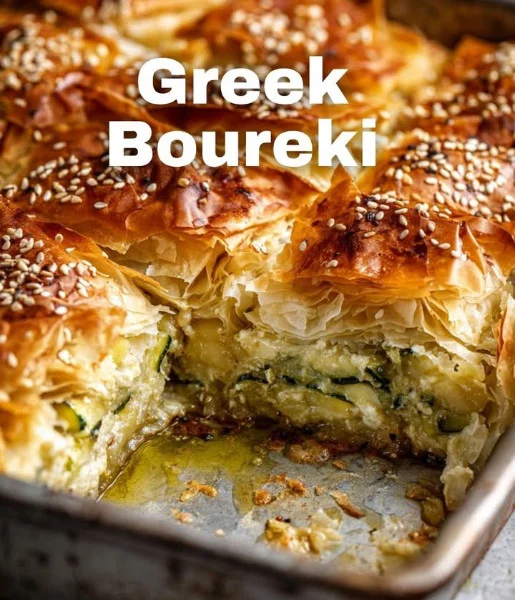
This method works because the buttered phyllo crisps and seals moisture while the milk-and-egg wash gently steams the vegetables into tender layers. The alternating cheese and vegetable layers keep every bite balanced — creamy, tangy, and never soggy.
Why This Recipe Is Perfect for Families
Speed — Greek Boureki comes together in about 20 minutes of hands-on prep and roughly 45–50 minutes in the oven, so total time is about an hour. That matters on school nights: you can start dinner, sit down with a homework question, and by the time the book closes, dinner is golden and ready. I often prep the vegetables while I pack lunches or switch laundry; those little multi-tasking windows are life-saving.
Budget — This recipe leans on cheap staples: potatoes and zucchini are seasonal and inexpensive, ricotta and feta stretch flavor without breaking the bank. When I calculate it out, Greek Boureki ends up costing under $1.75 per plate for my family of four, especially when zucchinis are on sale. If you want a heartier meat night in the rotation, pair it with a modest roast; I often serve it alongside a slow-cooked main like braised leg of lamb Greek-style one-pan dinner on special weekends, and that keeps the whole menu feeling cohesive.
Health — Greek Boureki sneaks vegetables and herbs into a comforting dish. The zucchini and potatoes give fiber and vitamin C, while the ricotta adds calcium and a protein boost. It’s not a salad pretending to be dinner; it’s a satisfying way to get veggies in without drama. For families trying to keep dinners both filling and nourishing, this is a rare win.
Convenience — Leftovers reheat beautifully, and Greek Boureki keeps you out of the dinner scramble the next day. Slice it cold into picnic-style portions or warm in the oven for 10 minutes. I frequently double the recipe and freeze one pan for nights when energy — and time — are non-existent. That kind of convenience frees up our evenings for homework, baths, and me actually sitting on the couch.
Health Benefits of Greek Boureki
Boost immune system: The zucchini and fresh herbs in Greek Boureki are rich in vitamin C and antioxidants. Mint and dill add trace nutrients and aromatic compounds that support digestion and may help your family fend off minor seasonal sniffles. Keeping meals vegetable-forward like this helps maintain daily vitamin intake without forcing supplements.
Reduce cholesterol: The combination of low-fat ricotta and the use of herbs instead of heavy sauces reduces saturated fat compared to cream-heavy bakes. Feta, used in moderation, brings calcium and flavor without needing excess butter. Swapping in part-skim ricotta or cutting the butter slightly can make this even more heart-friendly.
Support weight loss: Greek Boureki offers a satisfying volume of food thanks to the vegetables and the structured layers. It’s a high-satiety meal that’s moderate in calories and delivers protein from the ricotta and egg. If you’re watching portions, pair a moderate slice with a crisp green salad to feel full on fewer calories.
Anti-inflammatory properties: Dill and mint contain anti-inflammatory phytonutrients that complement the vegetables’ natural compounds. While no single dish cures inflammation, a regular rotation of vegetable- and herb-rich meals like Greek Boureki supports an anti-inflammatory pattern when paired with overall healthy eating.
If you want a meaty Mediterranean night to pair with these benefits, consider trying a roast lamb recipe for occasional special dinners.
Nutrition Facts (Per Serving)
| Calories | Protein | Carbs | Fat |
|—:|—:|—:|—:|
| 320 kcal | 14 g | 28 g | 16 g |
These values are estimates and depend on exact ingredient brands and portion sizes. To lower calories, swap full-fat ricotta for part-skim (or reduce butter on the top layers). To increase protein, add a cup of cooked lentils into the cheese mixture or serve slices with a side of Greek yogurt.
My Favorite Kitchen Tools
I’m an affiliate because I genuinely use these tools every week.
Air Fryer — I love crisping up small slices of leftover Greek Boureki in the air fryer to revive that crunchy phyllo edge. If you reheat individual portions often, a compact air fryer is worth buying because it brings back texture without drying the interior. I look for models that are top rated 2026 and easy to clean. (affiliate links: Air Fryer 1, Air Fryer 2)
Blender — I use a blender to quickly mix the ricotta, egg, and milk so the cheese layer in Greek Boureki is silky and lump-free. A high-speed blender is best quality for purees and quick saucing; I find the cleanup and speed highly recommended when I’m assembling multiple dishes. (affiliate links: Blender 1, Blender 2)
Chef’s Knife — A sharp chef’s knife makes quick work of thinly slicing zucchini and potatoes for this recipe; even slices matter here so the layers cook evenly. This knife is the best value for the money in my kitchen — balanced, sharp, and durable — and it makes assembly faster and safer on busy nights. (affiliate links: Chef’s Knife 1, Chef’s Knife 2)
Meal Prep Containers — After baking Greek Boureki, I portion leftovers into meal prep containers for lunches and easy dinners; airtight containers keep the phyllo crisper for longer and stack neatly in the fridge. For batch-cooking families, these are highly recommended and make weekday feeding painless, especially when you need grab-and-go meals. (affiliate links: Meal Prep 1, Meal Prep 2)
A quick story: I bought that chef’s knife five years ago and it’s still the workhorse of my kitchen — it made slicing the first pan of Greek Boureki feel professional even on my worst day. The blender saved me once when my grocery store ricotta had lumps; a 10-second whirl fixed it and the bake came out perfectly smooth. Those little tool investments are what make weeknight cooking calmer and more reliable.
Money-Saving Tips for Families
Cheap ingredient swaps:
- Use half the feta and add more ricotta to stretch flavor and save money without losing creaminess.
- Substitute thinly sliced sweet potatoes for half the regular potatoes when they’re on sale — flavor upgrade for little cost.
- Skip phyllo one week and make a simpler layered casserole with a whole-wheat tortilla base to cut price while keeping layers intact.
Smart leftover usage:
- Turn slices of Greek Boureki into lunch box stars: cold or warmed, they pair with raw carrot sticks and Greek yogurt as a dipping sauce.
- Chop leftover Greek Boureki and fold into an omelet for a breakfast that feels indulgent but is actually budget-friendly.
Weekly meal prep strategy: build a rotation that saves money and mental energy — one casserole (like Greek Boureki), one pasta dish, one soup, and one stir-fry. This keeps variety without constant grocery runs and helps you recycle ingredients across meals. Planning like this reduced my grocery trips to twice a week and stopped us leaning on expensive takeout more than once.
Rotate in a slow-cooked protein once a week for variety.
Healthy Variations
-
Weight loss version — Replace half the butter brushed on the phyllo with a light spray of olive oil and use part-skim ricotta. Swap one potato for more zucchini to lower carbs; estimated new calorie count per serving drops to about 250–270 kcal. Greek Boureki still feels indulgent, but with fewer calories.
-
High-protein version — Stir in one cup of cooked, finely chopped white beans or a cup of cooked quinoa into the cheese mixture; or add a layer of cooked, diced chicken breast between the vegetable layers. That can push protein up to 22–28 g per serving, depending on portion size, making Greek Boureki a more muscle-friendly family meal.
-
Vegetarian / Vegan option — For a vegan take, use a plant-based ricotta (or blended tofu) and vegan feta alternatives, swap the milk-and-egg wash for a mixture of unsweetened plant milk and a tablespoon of chickpea flour to help set the layers, and replace butter with a neutral oil. Use vegan phyllo or a crust alternative. The structure remains the same and flavors are still vibrant.
-
Kid-friendly version — Keep herbs mild and chop the zucchini into very thin rounds, so the texture is familiar to small mouths. Offer a side of ketchup or a mild tomato dip for dipping; kids love layers they can pick up. Cutting slices into finger-food strips makes Greek Boureki approachable for little hands.
If you like these swaps, you might also enjoy experimenting with Mediterranean salad pairings like my fresh Mediterranean Greek salad alongside the lighter versions.
Perfect for Busy Weeknights
Meal Prep Tips
- Assemble Greek Boureki the night before, cover, and refrigerate; bake the next evening. The flavors marry overnight, and you only need to pop it in the oven.
- Freeze a fully assembled (unbaked) pan wrapped tightly in foil for up to 3 months. Bake from frozen at 375°F, covered for 30 minutes then uncovered until golden.
How Often to Eat It
This is a comforting family dish I’d recommend rotating into your weekly meal plan once or twice a month. Eat it more often if you love vegetable-forward meals, but vary sides and proteins to keep meals balanced and interesting.
Best Side Dishes
- Quick cucumber-tomato salad dressed with lemon and olive oil — bright and cooling.
- Roasted chickpeas or a simple lentil soup for extra protein without fuss.
- Warm pita and tzatziki for dipping — quick, cheap, and kid-approved.
Try pairing Greek Boureki with a roast for a weekend family feast.
FAQ (People Also Ask)
-
How many calories?
A single serving of Greek Boureki, as prepared here, is roughly 320 kcal per serving based on standard ingredients and portion sizes. This estimate includes the phyllo, butter, ricotta, feta, potatoes, and zucchini. If you use part-skim dairy or reduce the butter, expect a noticeable drop — roughly 50–70 kcal less per serving depending on swaps. Precise numbers depend on the exact brands and portion sizes you use, so weigh ingredients for an accurate count. -
Is it good for weight loss?
Greek Boureki can fit into a weight-loss plan if you watch portions and make small swaps like part-skim ricotta and less butter. The vegetables add volume, which helps you feel full on fewer calories, and the protein from ricotta adds satiety. If you’re aiming for calorie control, pair a modest slice with a large salad and keep starchy sides minimal. The recipe is flexible, which is why I turn to Greek Boureki when I want comfort without derailing goals. -
How long does it last?
Cooked Greek Boureki keeps well in the refrigerator for 3–4 days in an airtight container. Keep slices separate if you want to reheat only what you’ll eat; that preserves texture better than reheating an entire pan multiple times. For best results, consume within four days or freeze portions if you want to stretch it longer. -
Can you freeze it?
Yes — Greek Boureki freezes well. You can freeze an unbaked assembled pan or already-baked slices. For unbaked pans, wrap tightly in foil and freeze for up to 3 months; bake from frozen, adding a little extra time and keeping it covered initially so the exterior doesn’t over-brown. For baked slices, cool completely and freeze flat on a tray before transferring to a container; reheat in the oven or air fryer for crisp edges. -
Is it kid-friendly?
Very much so. Greek Boureki’s mild, creamy layers and familiar textures tend to be well-received by kids. You can hide thinly grated zucchini among the cheese layers for picky eaters and serve small dipping cups of tomato sauce or Greek yogurt. In my house, calling it “cheesy layered pie” makes it an easy sell — and I’ve watched fussy teenagers clean their plates. -
Is it healthy?
Greek Boureki is a balanced dish when you focus on portion control and choose lighter dairy options where needed. It includes vegetables, calcium-rich cheese, and satisfying carbs. While phyllo and butter add fat, they’re used in moderation compared to heavier casseroles. For families focused on healthy eating, this is a reasonable comfort-food choice that supports vegetable intake and can be made lower-calorie with small adjustments. -
Is it budget-friendly?
Yes — Greek Boureki stretches inexpensive ingredients like potatoes and zucchini into a dish that serves several people. The use of ricotta and a small amount of feta brings flavor without needing expensive additions. I often make it when I want a filling dinner that won’t spike the grocery bill. If you buy vegetables in season or use store-brand cheese, you’ll save even more. -
What are alternatives?
If you want a similar layered comfort with different flavors, try swapping the filling for spinach and ricotta to make a spanakopita-style bake, or make a Mexican-inspired version with black beans, corn, and pepper jack cheese. You can also turn the concept into a lasagna-style dish with thinly sliced sweet potatoes. Greek Boureki’s structure is adaptable, so the technique transfers easily to other cuisines.
Final Thoughts
When evenings feel like a blur and you need a dinner that checks boxes — quick to prep, budget-friendly, and healthy enough to keep everyone happy — Greek Boureki is the recipe I reach for. It solves the small crises: hungry kids, low energy, and a tight grocery budget, while delivering a meal that looks and tastes like you spent more time on it than you did. I love that it’s forgiving: imperfect slices still feed the family and create that cozy table feeling we all crave.
Give it a try, make it your own, and come back to tell me what you changed. I promise the first warm slice will make your week feel a little calmer and a lot more delicious.
👉 Comment your experience or a tweak you tried below
👉 Share with a friend who needs a quick dinner idea
👉 Save this for the nights you don’t want to think about cooking
Soft affiliate reminder: if you found the kitchen tools helpful, check the tools I mentioned in the kitchen tools section — they make this recipe simpler and more reliable without fuss.