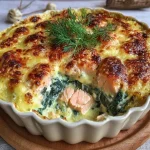
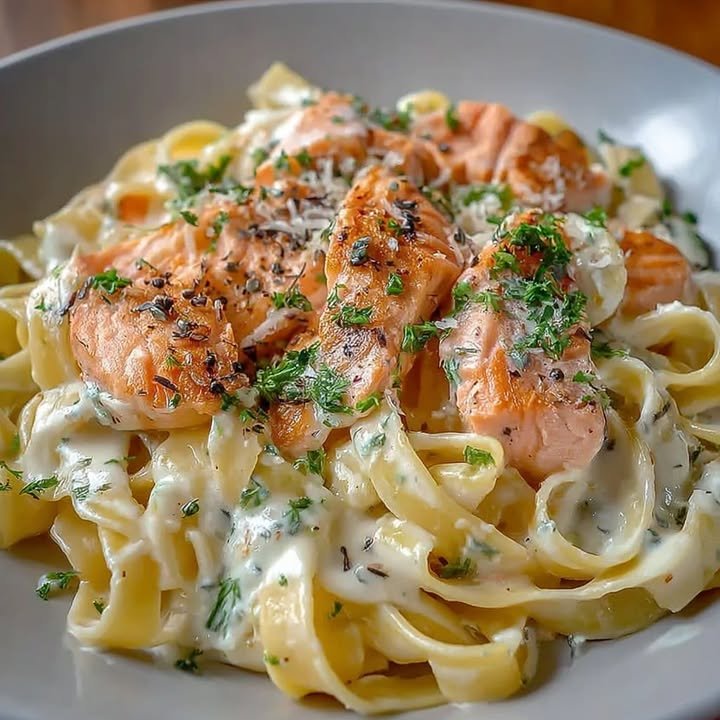
Mixed tagliatelle in a salmon sauce
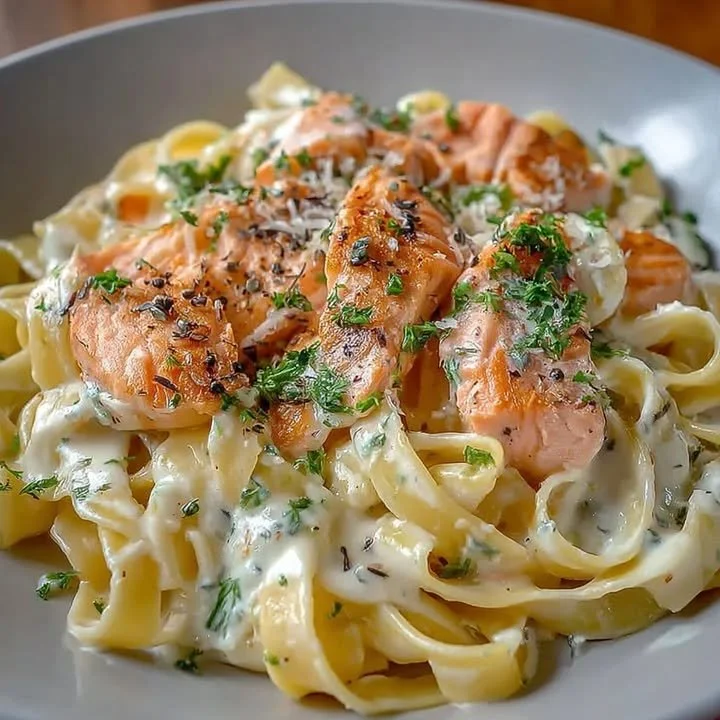
Easy, Quick & Creamy Mixed Tagliatelle in a Salmon Sauce — A Homemade Family Favorite
Mixed tagliatelle in a salmon sauce is one of those cozy, weeknight heroes that feels both special and comfortingly familiar. This easy, quick, creamy pasta recipe blends tender salmon with silky cream and ribbons of tagliatelle for a dish that’s perfect for a family meal, a date-night at home, or weekend cooking when you want something homemade but fuss-free.
I first fell for this dish on a rainy evening, inspired by a family recipe — you can peek at that same cozy vibe in this Aunt’s recipe discovery I keep returning to. The aroma of butter and cream, the gentle flake of salmon, and the glossy sauce clinging to each noodle make every bite a little celebration.
Background & Origin
Mixed tagliatelle in a salmon sauce likely draws from Italian coastal cooking where fish and simple dairy-based sauces meet fresh pasta. While not strictly traditional Italian, creamy salmon pasta has become a beloved fusion: rich Northern European seafood meets Mediterranean pasta techniques. It’s popular because it’s fast, forgiving, and luxe without being complicated.
A few fun facts and kitchen science:
- Fat = flavor: The butter and cream help extract and carry the salmon’s natural flavors into every bite.
- Pasta timing matters: Starchy cooking water helps the sauce cling to the tagliatelle for silky texture.
- What makes this version unique: it’s mixed tagliatelle — use a combination of tagliatelle plus linguine or spaghetti for visual interest and varied bite textures. For more on family-tested methods, check this found-tastes-better note that influenced my tweaks.
Ingredients
- 400 grams of pasta (tagliatelles, linguine or spaghetti) — room temperature, dried or fresh
- 2 pieces of fresh salmon (about 150 to 180 grams each) — skin removed or kept on as you prefer
- 250 milliliters of whole cream (thick or liquid) — cold from the fridge
- 1 tablespoon of unsalted butter — room temperature or softened
- Salt — to taste
Notes:
- Optional: a squeeze of lemon, cracked black pepper, chopped parsley, or a pinch of chili flakes.
- If your salmon is frozen, thaw fully in the fridge overnight or under cold running water.
- For pantry tips and swaps, see this handy kitchen guide.
Step-by-Step Instructions
- Cook the pasta according to package instructions until al dente.
- In a pan, melt the butter over medium heat and add the salmon, cooking until just done.
- Remove the salmon and flake it into pieces.
- In the same pan, add the cream and a pinch of salt, stirring to combine.
- Return the salmon to the pan, combining it with the cream sauce.
- Add the drained pasta to the sauce, mixing well.
- Serve hot, garnished if desired.
Expanded directions with times, temperatures and visual cues:
- Step 1 (Pasta): Bring a large pot of salted water to a rolling boil (about 100°C / 212°F). Add 400g mixed tagliatelle and cook 1–2 minutes less than package time for al dente — usually 7–9 minutes for dried tagliatelle. Reserve 1/2 cup pasta water before draining.
- Step 2 (Salmon): Heat a large non-stick skillet over medium heat (around 160–170°C on a gas ring). Add 1 tablespoon butter and let it melt until foamy. Gently lay salmon pieces in the pan. Cook 3–4 minutes per side depending on thickness — look for edges turning opaque and a slightly golden sear. The fish should be just cooked through and tender.
- Step 3 (Flake): Transfer salmon to a plate and use two forks to flake into bite-sized pieces; leave a few larger chunks for texture.
- Step 4 (Sauce): Lower heat to medium-low. Pour 250ml whole cream into the pan — it should warm and begin to steam but not boil. Stir and scrape up any browned bits from the pan (they’re flavor gold). Add a pinch of salt and 1–2 tablespoons reserved pasta water to loosen the sauce if needed. Visual cue: sauce should be glossy and slightly thickened — it will coat the back of a spoon.
- Step 5 (Combine): Return salmon to the pan and gently fold into the cream. Heat through for 1–2 minutes.
- Step 6 (Toss): Add drained pasta directly to the sauce. Toss or gently stir over low heat for 30–60 seconds so the pasta absorbs the sauce. Add more pasta water if the sauce seems too thick — you want a creamy ribbon, not soup.
- Step 7 (Serve): Plate immediately. Garnish with chopped parsley, a twist of black pepper, or a lemon wedge.
Mini-tips:
- Visual cue for doneness: salmon flakes easily and is opaque throughout.
- Avoid boiling the cream — keep it at a gentle simmer for a silky texture.
- If the sauce becomes grainy, heat may be too high — drop to low and whisk in a splash of pasta water.
Pro Tips & Common Mistakes
- How to improve flavor:
- Finish with a small knob of cold butter off-heat for sheen and extra richness.
- Add lemon zest or a splash of white wine to brighten the cream.
- Texture tricks:
- Use reserved pasta water (starchy) to emulsify and thicken the sauce naturally.
- Don’t overcook the salmon — it should remain moist, not dry.
- What NOT to do:
- Don’t boil the cream; high heat can split it.
- Don’t overload the pan — cook salmon in batches if needed to avoid steaming.
- Helpful shortcuts:
- Use pre-cooked or smoked salmon for a super-quick weeknight version — fold in at the end just to heat through.
- Prep-ahead hacks:
- Poach salmon gently in milk or broth ahead of time and refrigerate. Reheat briefly in cream sauce.
- Chop herbs and measure cream ahead for fast assembly.
For more behind-the-scenes tips and to meet the voice behind these recipes, check out more from our author: meet the author.
Variations & Substitutions
- Vegan: Use plant-based cream (oat or soy), vegan butter, and smoked tofu or chickpeas instead of salmon.
- Gluten-free: Swap pasta for gluten-free tagliatelle or a short gluten-free pasta; check cook times.
- Low-carb: Use spiralized zucchini or shirataki noodles; toss in the warm cream sauce just before serving.
- Kid-friendly: Reduce lemon and chili; flake salmon into tiny pieces and mix thoroughly so it’s easy to eat.
- Extra creamy: Stir in 1/4 cup cream cheese or mascarpone for an ultra-luxurious sauce.
- Spicy: Add crushed red pepper flakes while sautéing or a small pinch of cayenne.
- Budget-friendly: Use canned salmon (well-drained) or smaller portions of fresh salmon mixed with a firm white fish.
Serving Suggestions
- Best sides:
- A crisp mixed green salad with lemon vinaigrette to cut the richness.
- Steamed asparagus or roasted cherry tomatoes for color and freshness.
- Bread:
- Crusty baguette or garlic bread to mop up the sauce.
- Wine pairing:
- A crisp Pinot Grigio, unoaked Chardonnay, or a light Rosé pairs beautifully.
- How to plate beautifully:
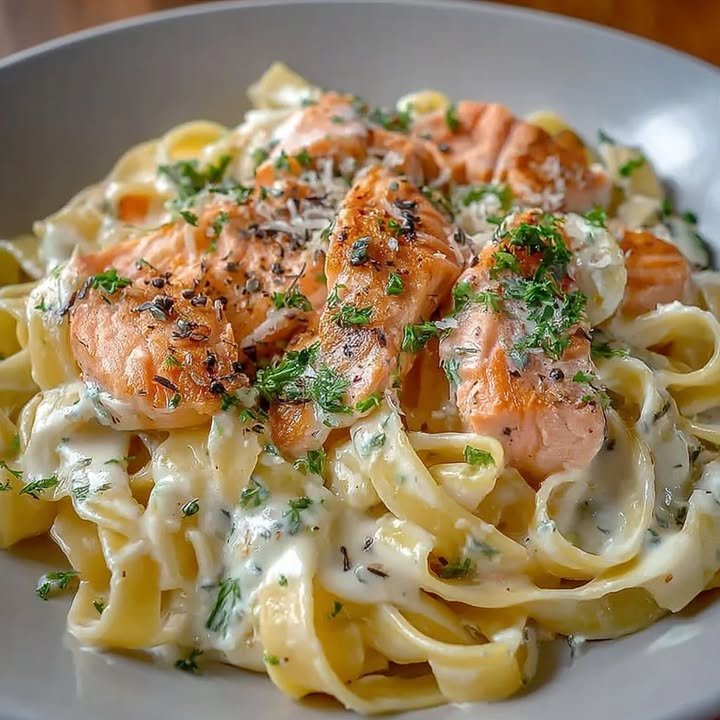
- Twirl a nest of pasta in the center, place larger salmon chunks on top, sprinkle chopped parsley, and finish with a lemon wedge and cracked pepper. Use a shallow white bowl for a bakery-style presentation.
Storage, Freezing & Reheating
- Fridge: Store in an airtight container for up to 2 days. Creamy seafood dishes are best eaten fresh.
- Freezer: Not ideal — cream sauces can separate. If you must freeze, remove pasta from sauce, freeze salmon in cream-free portions for up to 1 month, and reheat gently with fresh cream.
- Reheating method:
- Reheat gently on the stovetop over low heat, adding a splash of milk or cream and a bit of pasta water to revive the sauce.
- Microwave in short bursts, stirring between, and add a splash of liquid.
- Meal-prep options:
- Cook pasta and salmon separately; store chilled and assemble & heat just before serving for best texture.
Nutrition & Health Info
- Rough estimate per serving (serves 4): 600–700 kcal, 25–35g protein, 30–40g fat depending on exact cream and salmon portions.
- Lighter versions:
- Use half-and-half instead of heavy cream, increase lemon and herbs, and add more vegetables to reduce calorie density.
- Health notes:
- Salmon is an excellent source of omega-3s and lean protein. Balance richness with fresh greens and light sides for a wholesome meal.
FAQ
- Can I prepare Mixed tagliatelle in a salmon sauce ahead of time?
- Yes, you can cook components ahead (pasta, flake-cooked salmon). Store separately and combine just before serving for the best texture.
- How do I thicken or thin the sauce?
- Thicken: simmer gently to reduce, or stir in a little cream cheese. Thin: add reserved pasta water, milk, or a splash of stock.
- Ingredient substitutions?
- Use smoked salmon, canned salmon, or a firm white fish. Swap cream for coconut cream in vegan versions.
- Can I double or halve the recipe?
- Absolutely — the method scales well. For doubling, use a wider pan to avoid crowding the salmon.
- What cookware is best?
- A large non-stick or stainless steel skillet and a heavy-bottomed pot for pasta are ideal. Use tongs to mix pasta with the sauce.
- Can I make it dairy-free or meat-free?
- Yes — see vegan substitutions above (oat cream + smoked tofu/chickpeas).
- What sides go well with it?
- Light salads, roasted vegetables, crusty bread, or a simple lemony quinoa.
Conclusion
Thanks for cooking along! Mixed tagliatelle in a salmon sauce is one of those recipes that feels special but is totally do-able on a busy night. I hope this version becomes a new family favorite in your home — let me know how it turns out! Please leave a comment, rate the recipe, or share a photo on social media so we can celebrate your kitchen wins together.
📌 End-of-Post Image Placeholder
👉 #fblifestyle