Pull-Apart Rosemary-Garlic Bread
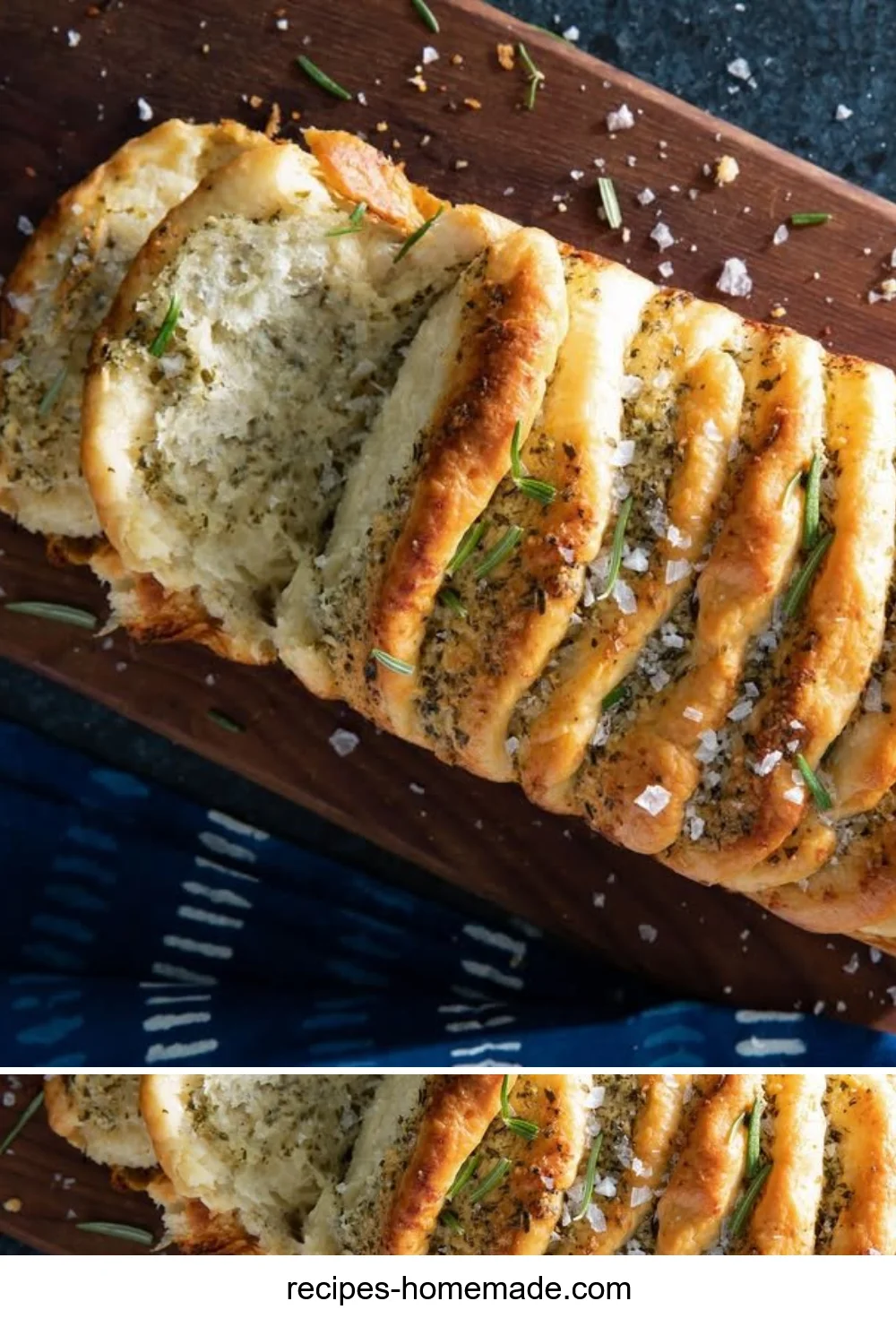
Pull-Apart Rosemary-Garlic Bread
There’s nothing more comforting than warm, pull-apart rosemary-garlic bread fresh from the oven — the kind you tear into with friends and somehow eat half a loaf before dinner even starts. I made this on a rainy Sunday once, and the whole house smelled like garlic and herbs; my neighbor knocked asking for a piece (I gave in).
If you love simple, hands-on baking, this pull-apart rosemary-garlic bread is forgiving, cozy, and perfectly snackable. And if you also bake sweet things, you might like these banana bread muffins for dessert after dinner.
Why this recipe works
- Quick to make — the dough is easy and rises predictably, so you get warm bread in about 2 hours.
- Simple ingredients — flour, yeast, water, olive oil, garlic, and fresh rosemary. Nothing fancy.
- Pull-apart texture — small dough balls give you lots of soft interior and a slightly crisp top.
- Beginner friendly — no fancy shaping skills needed; if you can roll dough into balls, you’re golden.
Cooking insight: letting the dough rest after you form the balls makes them puff up and stick together better during baking, giving you those satisfying tear-apart pieces.
(By the way, if you like a softer, cake-like crumb in your bakes, check out how I make a cake-like banana bread — same comfort, different mood.)
Ingredients you’ll need
- 3 1/2 to 4 cups all-purpose flour — start with 3 1/2; add more if the dough is sticky.
- 2 teaspoons salt — balances the garlic.
- 2 teaspoons sugar — helps the yeast wake up.
- 1 packet (2 1/4 teaspoons) instant yeast — no proofing needed, but I still let it bloom.
- 1 cup warm water (about 105–115°F / 40–46°C) — warm to the touch, not hot.
- 2 tablespoons olive oil — for tender crumb and flavor.
- 3 cloves garlic, minced — fresh is best; it gives a bright punch.
- 2 tablespoons fresh rosemary, chopped — strip the leaves and chop fine.
- Butter, for brushing — melted, for that glossy finish.
- Extra rosemary, for garnish
Notes:
- If your kitchen is cold, let the dough rise in an oven with just the light on.
- Want a milder garlic flavor? Sauté the minced garlic briefly in olive oil, then cool before using.
Kitchen tools
- Large mixing bowl
- Wooden spoon or stiff spatula
- Measuring cups and spoons
- Dough scraper (optional)
- Baking dish (9×13-inch or similar)
- Pastry brush
- Clean kitchen towel or plastic wrap
How to Make Pull-Apart Rosemary-Garlic Bread
- In a large bowl, mix the warm water, sugar, and yeast. Let it sit about 5 minutes until frothy. You should see bubbles on the surface — that tells you the yeast is happy.
- Add salt and olive oil to the yeast mixture. Gradually add 3 1/2 cups flour, stirring until a shaggy dough forms. Add more flour a little at a time if it’s too sticky.
- Turn the dough onto a lightly floured surface and knead for about 10 minutes until smooth and elastic. The dough should spring back when poked.
- Place the dough in a greased bowl, cover, and let it rise in a warm place for about 1 hour or until doubled in size.
- Punch down the dough and roll it into small balls (about 1.5–2 inches each). You should get roughly 16–20 balls depending on size.
- In a separate bowl, mix the minced garlic and chopped rosemary. Dip each dough ball into the garlic-rosemary mix (or brush lightly), then layer the balls in a greased baking dish. Try to place them snugly so they bake into each other.
- Cover and let it rise another 30 minutes — you’ll see the balls puff and the seams begin to close.
- Preheat the oven to 375°F (190°C) while the dough finishes its second rise.
- Brush the tops with melted butter and sprinkle with additional rosemary.
- Bake 25–30 minutes or until the top is golden brown and an instant-read thermometer in the center reads about 190–200°F (88–93°C).
- Remove from the oven and let cool slightly before serving so the texture sets a bit.
Quick tip: if the top is browning too fast, tent with foil for the last 5–10 minutes.
(If you’re used to quick baking projects, this method is similar in simplicity to making banana bread muffins, especially when it comes to timing and that comforting, warm-bread smell.)
Pro tips for success
- Water temperature matters — too hot kills the yeast; too cold slows it. Aim for warm, not hot.
- Knead until the dough is smooth and a little tacky, not sticky. If it clings to your hands, dust with flour sparingly.
- Use fresh rosemary — dried works, but fresh gives that bright herbal pop.
- For deeper garlic flavor without raw bite, briefly sauté the minced garlic in olive oil and cool before dipping the dough balls.
- Brush with butter right before baking for a shinier crust, and again as soon as it comes out for extra flavor.
Common mistakes to avoid
- Over-kneading: this is rare with hand kneading, but stopping when the dough is elastic keeps the crumb tender.
- Using boiling water: it will kill the yeast. Always test the warmth on your wrist.
- Not letting it rise enough: under-proofed dough won’t puff properly. Give it time, especially in cool kitchens.
- Overloading with garlic: too much raw garlic can dominate. I once added way too much and had to apologize to guests — lesson learned.
Variations and substitutions
- Spicy version: add crushed red pepper to the garlic mix for a kick.
- Cheesy pull-apart: tuck small cubes of mozzarella between some dough balls for melty surprises.
- Dairy-free: use olive oil instead of butter for brushing.
- Herb swap: try thyme or sage in place of rosemary.
What to serve with this recipe
This bread is a star as an appetizer or alongside soups and salads.
- Serve with a bowl of tomato soup or Minestrone.
- Great next to a simple green salad with lemony vinaigrette.
- For a savory spread, pair with roasted vegetables and a big platter of cheeses.
- If you love cheesy bread pairings, try a hearty side like cheese-crusted bread with mozzarella and bacon bits for a weekend brunch table.
Storage and leftovers
- Refrigerator: Store cooled bread in an airtight container for 3–4 days.
- Freezer: Wrap cooled loaf tightly in foil and place in a freezer bag for up to 3 months. Thaw overnight in the fridge, then warm in a 350°F oven for 10–15 minutes.
- Reheating: Warm slices in a 350°F oven for 8–10 minutes or zap individual pieces in the microwave for 10–20 seconds (they’ll be softer that way).
FAQ (People Also Ask)
Q: Can I make the dough ahead of time?
A: Yes. After the first rise, you can punch it down, form the balls, place them in the dish, cover tightly, and refrigerate overnight. Bring to room temp and let rise 30–45 minutes before baking.
Q: Can I freeze unbaked dough?
A: You can freeze the shaped balls in a single layer on a baking sheet. Once frozen, transfer to a bag. Thaw in the fridge overnight, then let rise and bake as directed.
Q: What’s the best pan to use?
A: A 9×13-inch baking dish works well for even baking. A cast-iron skillet is great too for crisper bottoms.
Q: Can I use dried rosemary?
A: Yes, but use less — dried is more concentrated. One teaspoon dried equals about 1 tablespoon fresh.
Q: Why did my bread come out dense?
A: Likely under-proofed dough or not enough kneading. Give the dough time to double and knead until elastic.
Quick recipe summary
Prep time: 20 minutes active + rises (about 1 hour 30 total)
Cook time: 25–30 minutes
Servings: 8–10
Ingredients:
- 3 1/2 to 4 cups all-purpose flour
- 2 teaspoons salt
- 2 teaspoons sugar
- 1 packet instant yeast
- 1 cup warm water
- 2 tablespoons olive oil
- 3 cloves garlic, minced
- 2 tablespoons fresh rosemary, chopped
- Butter, for brushing
- Extra rosemary for garnish
Short steps:
- Mix water, sugar, yeast; let froth.
- Add salt, oil, and flour; knead until smooth.
- First rise ~1 hour. Punch down.
- Form balls, dip in garlic-rosemary, place in dish.
- Second rise 30 minutes. Brush with butter.
- Bake 375°F for 25–30 minutes.
(If you’re into quick breads, you might find useful tips in this classic banana bread recipe — same patience, different flavors.)
Final thoughts
This pull-apart rosemary-garlic bread is one of my easiest go-to comfort bakes. It’s forgiving, smells amazing, and disappears fast — trust me, I’ve had to hide a loaf before family dinner. If you try it, tell me how it went (especially if you added cheese — I won’t judge).
Happy baking! And if you want something smaller and muffin-sized, check out this banana bread muffins recipe for an after-dinner treat.